
Garage doors have become much more sophisticated than simply opening and closing at the push of a button. Modern systems can include rolling-code remotes, smartphone controls, cameras, activity alerts, battery backup, automatic locks, and several other features designed to improve convenience and security.
The challenge for homeowners is deciding which of those features provide meaningful everyday value. Some security upgrades address common concerns, such as forgotten open doors or unauthorized remote access. Others may be useful only for particular households. Understanding the difference can help you choose features based on how you actually use your garage rather than paying for technology you may rarely need.
Start With the Security Features That Protect Access
When evaluating garage door security features, it makes sense to begin with the technology that directly controls who can open the door. These features form the foundation of a secure modern system.
If you are replacing an older door or opener, considering security during garage door installation can also make it easier to select compatible components from the beginning.
Rolling-Code Remotes Are a Practical Baseline
Older garage door remotes could rely on fixed codes. Modern rolling-code systems are designed differently. Each time the garage door remote is used, the system generates a new code rather than repeatedly transmitting the same one.
This makes rolling-code technology one of the more worthwhile security features for everyday homeowners.
For example, LiftMaster’s Security+ 2.0 technology sends a new code to the opener with every remote click. The manufacturer also offers additional security functions such as automatic garage door locks and electronic protection against forced openings.
For homeowners comparing older systems with current garage door technology, secure remote communication should generally rank higher than flashy convenience features.
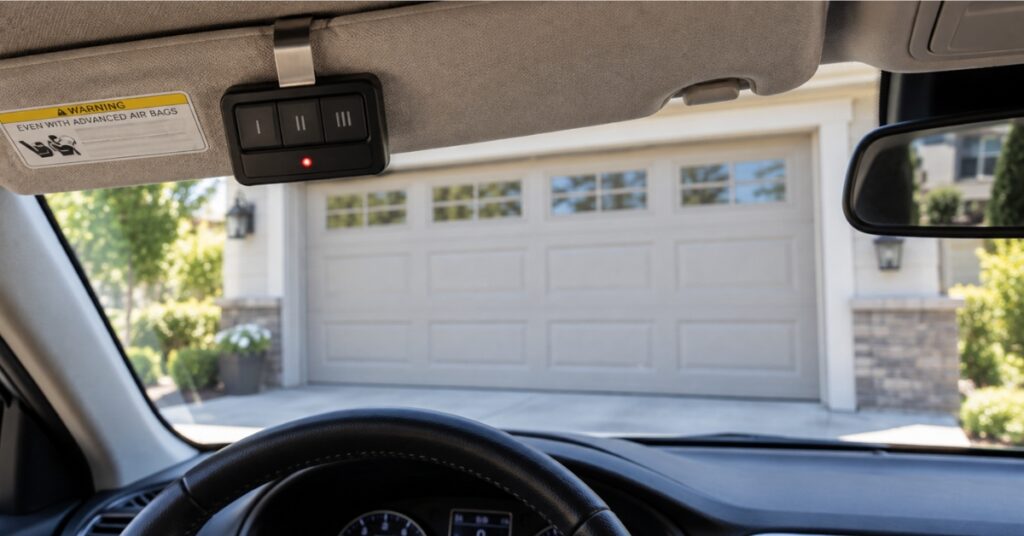
A remote still needs to be treated like a key. Leaving one visible inside a vehicle parked outdoors can create unnecessary risk. Built-in vehicle controls or smartphone access may reduce the need to keep a traditional remote clipped to a visor.
Keypad Access Is Simple but Surprisingly Useful
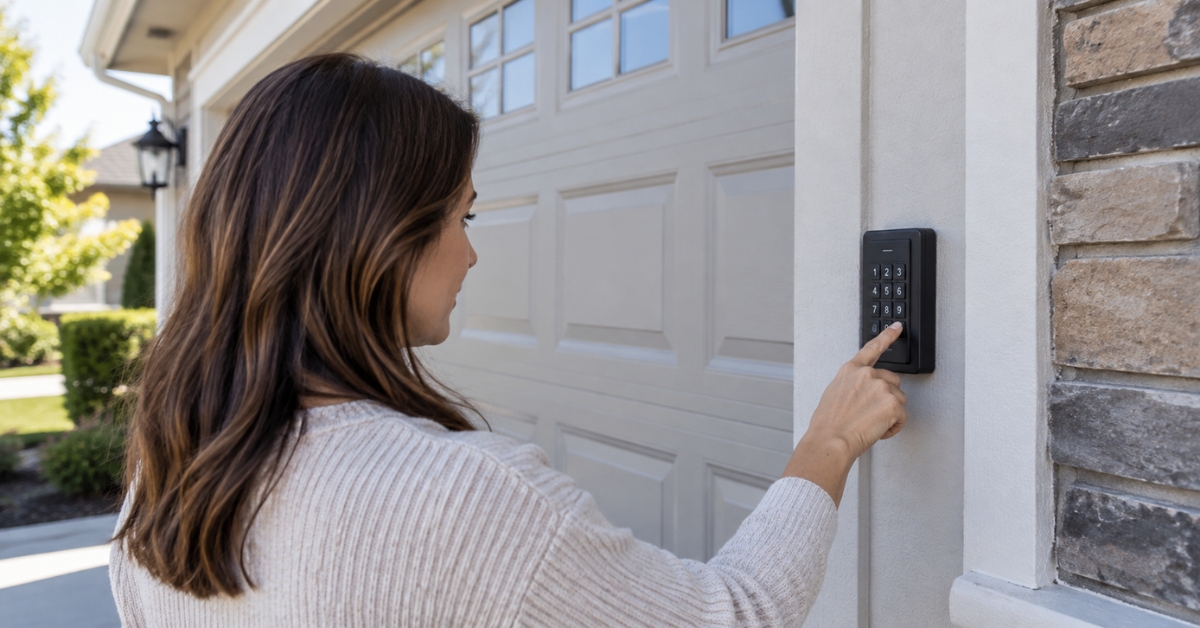
An exterior keypad may not seem as advanced as smartphone-based garage door automation, but it solves several practical access problems.
A keypad can be useful when:
- A family member needs to enter without carrying a remote.
- Someone goes for a walk or run without house keys.
- A trusted visitor needs temporary garage access.
- A homeowner does not want to distribute additional physical remotes.
The security value depends partly on how the keypad is used. Avoid obvious PINs such as an address, repeated numbers, or easily guessed dates. If your system supports temporary or individual access codes, those can be preferable to sharing one permanent household code.
Some newer video keypads take this further by allowing unique PIN codes for family members, guests, or service providers. Certain systems can also associate access with video and notifications, making it easier to understand who entered and when.
For many households, however, a reliable standard keypad is enough. Video integration is useful, but it is not automatically necessary.
Smartphone Control Is Most Valuable for Awareness
The ability to open a garage door from a phone gets much of the attention when discussing smart openers. In practice, remote operation may not be the most valuable part.
The ability to check the door’s status can matter more.
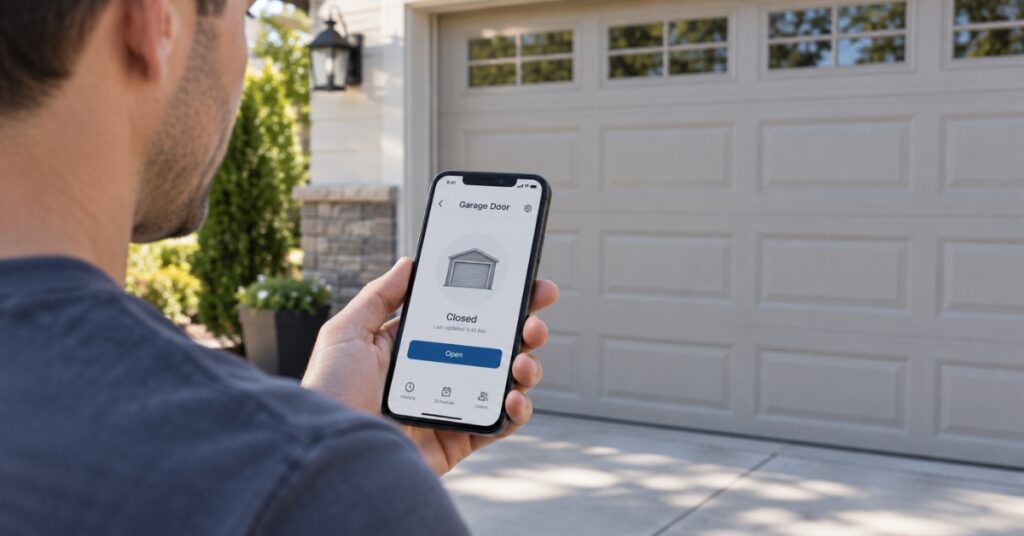
Think about how often homeowners leave home and wonder, “Did I close the garage?”
With compatible app-based access, you can check the door rather than driving back home. Many systems can also send notifications when the garage opens or closes.
That makes smartphone connectivity particularly useful for households where several people regularly use the garage.
Alerts May Matter More Than Automation
Garage door automation sounds convenient, but notifications can provide more direct security value.
An unexpected “garage opened” notification can immediately tell you something happened. Depending on the system, you may be able to check the status or close the door remotely.
Alerts can also help identify everyday habits that create security gaps. If someone repeatedly leaves the garage open after arriving home, the problem becomes much easier to notice.
Some smart LiftMaster openers, for example, support smartphone opening, closing, and alerts through myQ.
You do not necessarily need every notification enabled. Too many alerts can become background noise. Door-opened alerts during unusual hours or reminders when a door has remained open can be more useful than receiving a notification for every normal event.
Lockout Controls Add Value When You Are Away
A lockout or vacation setting disables normal remote operation while you are away. Depending on the opener, the feature may be activated from a wall control or another interface.
This is particularly useful during vacations or other periods when nobody should be entering through the garage.
The important thing is understanding exactly what your system’s lockout function disables. Different opener models can handle remotes, keypads, apps, and accessories differently. Homeowners should check the manufacturer’s instructions rather than assuming every access method is disabled.
An automatic physical garage door lock can provide another layer of protection on compatible systems. Some models automatically engage a deadbolt-style lock when the garage door closes. LiftMaster specifically lists an Automatic Garage Door Lock among its security options.
That can be worthwhile for homeowners who prioritize resistance to forced opening, although it is not essential for every residential setup.
Battery Backup Is More About Reliable Access
Battery backup is sometimes marketed alongside security technology, but its primary value is reliability.
A power outage can disable a conventional electric opener. Battery backup allows compatible systems to continue operating for a limited period without household power.
That can be especially valuable if the garage is a household’s main entry point or if vehicles need to be moved during an outage.
LiftMaster offers residential opener models that combine battery backup with smartphone control and other security features. The company describes battery backup as allowing homeowners to get in and out when power is down.
Battery backup should not be confused with a permanent power solution. Batteries eventually require replacement, and homeowners should pay attention to system warnings indicating a weak or failing battery.
Still, compared with some premium smart features, battery backup solves a straightforward real-world problem. That often makes it a worthwhile feature when choosing between opener models.
Are Garage Door Cameras Worth Paying For?
Built-in cameras are useful, but their value depends heavily on the garage and household.
A camera can make sense when the garage is:
- Frequently used as a household entrance.
- Used for deliveries.
- Shared by several family members.
- Used to store valuable equipment.
- Regularly accessed by contractors or service providers.
Instead of merely receiving an alert that the garage opened, a camera may allow you to see what caused the activity.
Some current smart opener cameras include live video, night vision, two-way audio, person detection, and access-related alerts. Certain recorded-video and storage functions may require a paid plan, so homeowners should check ongoing costs before treating every advertised camera capability as included.
When a Camera Is Probably an Extra
If you already have a security camera covering the garage, another camera built into the opener may offer limited additional value.
Similarly, a homeowner who rarely uses the garage as an entrance may not need detailed video monitoring.
A camera is therefore better viewed as a situational upgrade than a basic security requirement. Rolling-code access, a properly closing door, useful alerts, and good household access habits should generally come first.
Timer-to-Close Can Help With a Common Human Mistake
Some garage door systems can automatically close the door after a preset period.
This feature addresses one of the simplest garage security problems: accidentally leaving the door open.
If your family frequently enters through the garage, unloads groceries, works in the yard, or has teenagers coming and going, forgetting the door becomes more likely. Timer-to-close provides an additional safeguard.
LiftMaster includes Timer-to-Close on certain models and describes the function as automatically closing the garage door after a preset amount of time.
Homeowners should still pay attention to normal door operation and safety sensors. Automation is not a substitute for making sure the door, opener, and safety system are operating correctly.
Security Features Cannot Compensate for a Poorly Operating Door
It is easy to focus on apps, cameras, and remotes while overlooking the physical garage door.
A connected opener cannot compensate for damaged hardware, improper closing, worn components, or a door that does not reliably reach its closed position. The best security system starts with a door that closes and operates correctly.
This is also where choosing equipment carefully matters. Comparing long-term brand value can help homeowners look beyond feature lists and consider compatibility, serviceability, parts availability, and long-term ownership.
A feature is only valuable if it continues working reliably and can be supported when something eventually needs attention.
Check Warranty Coverage Before Paying for Premium Features
Adding more technology can also mean adding more components with their own coverage terms.
Do not assume that the motor warranty applies equally to a camera, battery, keypad, remote, or other accessory. Warranty periods can vary significantly by component.
For example, one LiftMaster smart opener lists lifetime coverage for its motor and belt, five years for parts, and one year for accessories.
Before buying a premium opener, review the garage door warranty details and determine which components are actually covered. This becomes increasingly important as more electronic features are integrated into the opener.
Understanding warranty coverage can also prevent assumptions about labor, accessories, batteries, and other components that may have different terms from the primary garage door or opener.
Which Features Should You Prioritize?
There is no single perfect security package for every garage. The best combination depends on household habits, how often the garage is used as an entrance, and what is stored inside.
For most homeowners, priorities can be grouped roughly like this:
High everyday value: Rolling-code remote technology, reliable keypad access, door-status alerts, and secure lockout controls.
Useful for many households: Smartphone monitoring, battery backup, timer-to-close, and individual access codes.
Situational upgrades: Integrated cameras, two-way audio, advanced video detection, and automatic physical locks.
The key is not buying the opener with the longest feature list. It is identifying the problems you actually want the system to solve.
If your biggest concern is forgetting whether the door closed, status monitoring and alerts may matter most. If several people need access, individual codes and a keypad may provide more value. If outages are common or the garage is your main entrance, battery backup becomes more important.
Security works best when the technology matches how the household actually uses the garage.
Frequently Asked Questions
What is the most important garage door security feature?
Secure access control is a strong starting point. Modern rolling-code remote technology helps prevent the opener from repeatedly transmitting the same access code. A properly functioning door and responsible control of remotes and access codes remain equally important.
Is a smart garage door opener more secure than a regular opener?
Not automatically. Smart connectivity can add useful monitoring, alerts, and remote control, but security depends on the complete system. A modern conventional opener with rolling-code technology can still provide strong basic access protection.
Should I get a garage door opener with a camera?
A camera can be useful if your garage receives deliveries, serves as a frequent household entrance, or contains valuable items. If another security camera already covers the area, an integrated opener camera may be less important.
Is battery backup a security feature?
It is primarily a reliability feature. Battery backup allows compatible garage door openers to continue operating during a power outage, which can help maintain normal access to the garage.
Are garage door keypads secure?
Modern compatible keypads can provide convenient access when used responsibly. Choose a PIN that is difficult to guess, change it when necessary, and use temporary or individual codes when the system supports them.
What should I look for when comparing garage door security features?
Start with secure remote technology, reliable door operation, keypad options, useful alerts, lockout capabilities, and battery backup. Then decide whether premium features such as cameras, video storage, or automatic locks solve a meaningful problem for your household.
Build Security Around the Way You Use Your Garage
The best garage door security features are rarely the ones that sound the most futuristic. They are the ones that quietly prevent common problems, give homeowners better awareness, and keep access dependable.
Rolling-code remotes, sensible keypad access, useful notifications, lockout settings, and battery backup provide practical value for many households. Cameras and advanced automation can add another layer of control, but they are most worthwhile when they address a specific need.
Rather than comparing garage door openers by the number of features on the box, consider how your family enters the home, who needs access, how often the garage is left unattended, and which situations you actually want the technology to handle. That approach makes it much easier to separate useful security from features that are simply nice to have.


