
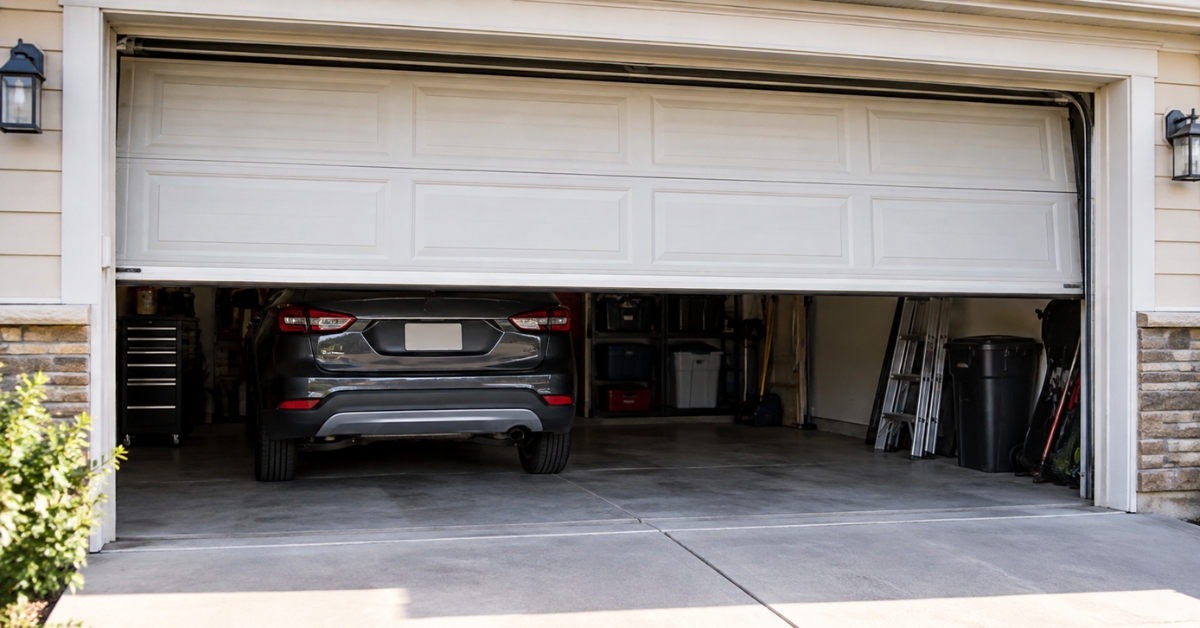
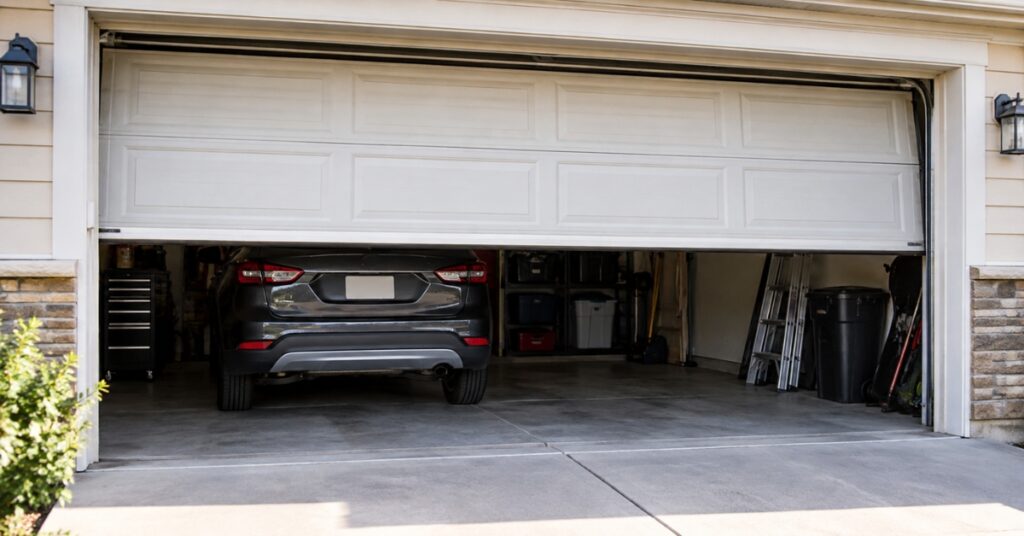
A garage door problem does not always announce itself as an emergency. Sometimes it starts with a new squeak, a door that takes a little longer to open, or an opener that suddenly sounds like it is working harder than usual. Other times, the warning is impossible to miss. The door may stop halfway, hang crooked, refuse to close, or become stuck open when you need to secure the house.
The challenge for homeowners is knowing which problems can reasonably wait for a scheduled appointment and which ones call for same day garage door repair. The difference usually comes down to safety, security, and the risk of additional damage. If the door is unstable, cannot secure the garage, or has a failed component that affects how its weight is supported, continuing to operate it can turn a repairable problem into something much more serious.
The First Question Is Whether the Door Is Safe to Operate
When something goes wrong, it can be tempting to press the garage door button a few more times to see whether the problem corrects itself. That is not always a safe approach.
A garage door relies on springs, cables, rollers, tracks, hinges, and an opener working together. When one important component fails, repeatedly operating the system can place additional strain on the parts that are still functioning.
If the door looks crooked, feels unusually heavy, has a visible cable problem, or appears to have moved out of its tracks, stop operating it. Professional same day garage door repair is appropriate when waiting could leave the door unsafe, inaccessible, or unsecured.
Some situations are even more urgent. If the door cannot secure the property, is severely off track, or is in a position that creates an immediate safety concern, emergency garage door repair may be the more appropriate response.
A Garage Door Stuck Open Should Usually Be Addressed Promptly
A garage door that will not close is more than an inconvenience. It can leave vehicles, tools, bicycles, storage, and an entry point into the home exposed.
Start by checking for an obvious obstruction around the opening or safety sensors. Do not touch springs, cables, drums, or other tensioned components while investigating the problem. If there is no simple explanation and the door still cannot close normally, avoid forcing it.
A stuck-open door becomes particularly urgent when you are preparing to leave the property, the garage provides direct access to the home, or the problem occurs overnight. Even if the mechanical failure itself is relatively minor, the inability to secure the garage changes how quickly the problem should be addressed.
A Door Stuck Closed Can Also Become Urgent
A closed garage door may initially seem less serious because the property remains secure. Circumstances can still make the problem urgent.
If your vehicle is trapped inside and you need it for work, school, an appointment, or another important commitment, waiting several days for service may not be practical.
Pay attention to how the failure occurred. A door that refuses to open immediately after a loud bang may have a broken spring. A door that suddenly feels extremely heavy may also have a problem with its counterbalance system.
Do not assume pulling the emergency release automatically makes the door safe to lift manually. If a spring has failed, you could be dealing with much more of the door’s actual weight than expected.
A Broken Spring Is Not a Problem to Keep Testing
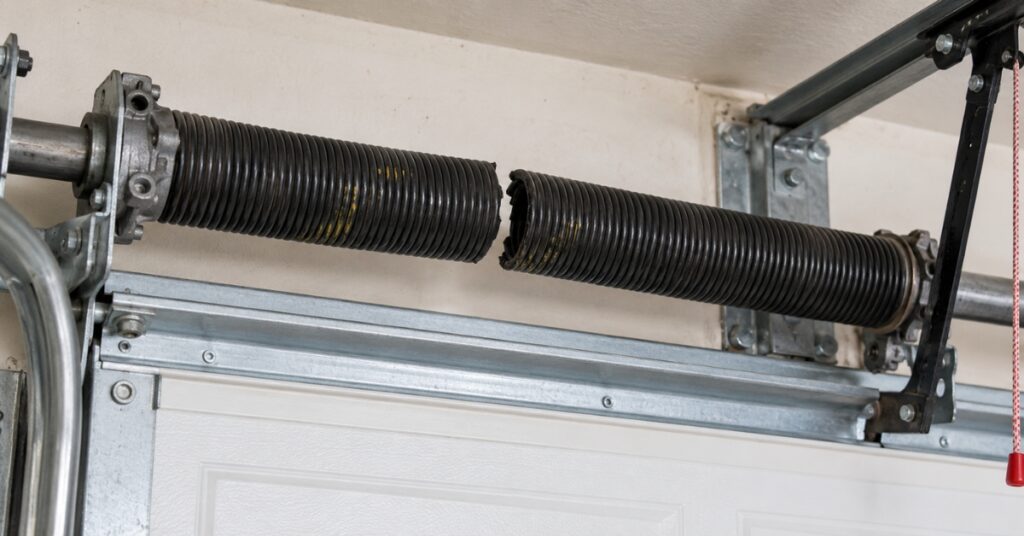
A loud bang from the garage followed by a door that will not open normally is a common warning sign of spring failure.
Garage door springs counterbalance much of the door’s weight. When a spring breaks, the opener may no longer be able to lift the door properly. The opener might strain, the door may rise only a short distance, or the door may suddenly feel far heavier than usual.
Repeatedly running the opener is not a useful test. Doing so can place unnecessary stress on the opener and other components.
A suspected broken spring should be professionally inspected rather than treated as a DIY project. Garage door springs operate under significant tension, and improper handling can result in injury or additional damage.
Loose or Broken Cables Mean It Is Time to Stop Using the Door
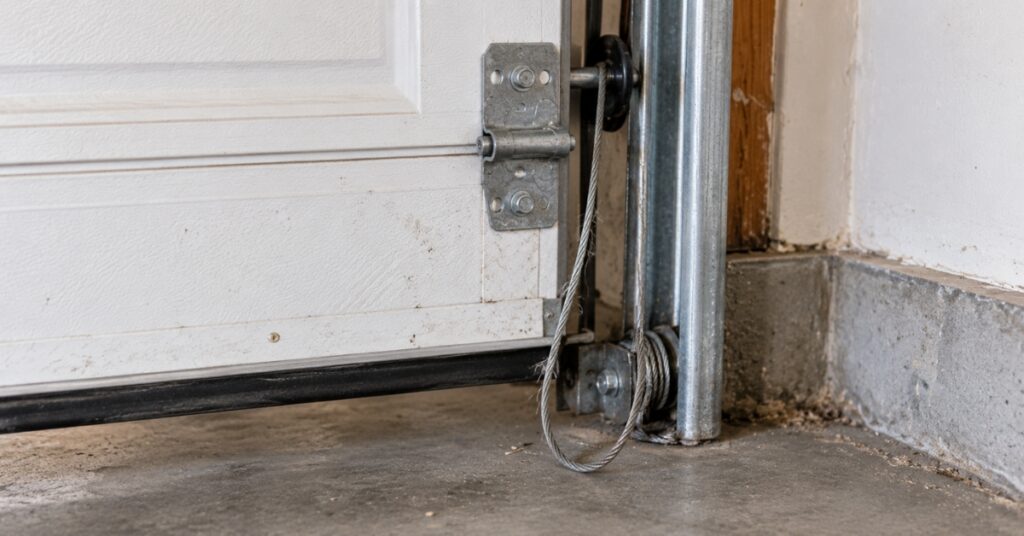
Garage door cables work with the spring system to help control the door as it travels along its tracks. A cable problem can appear as visible slack, fraying, a hanging cable, uneven movement, or one side of the door sitting lower than the other.
If a cable has slipped off its drum or broken completely, do not continue opening and closing the door.
A compromised cable can leave the door uneven or unstable. Continued operation may allow the door to bind, damage the track, place additional strain on other hardware, or move unpredictably.
There are several broken cable signs homeowners can watch for before the problem progresses. Visible cable damage, uneven movement, and a crooked door should all be taken seriously.
Do not attempt to rewind, reconnect, or reposition a garage door cable yourself.
An Off-Track Garage Door Needs Prompt Attention
An off-track condition is another situation where homeowners should stop operating the garage door.
The problem may begin with one roller partially leaving its track. In more severe cases, the door can sit at an obvious angle, with one side noticeably higher than the other.
Trying to force an off-track door closed can make matters worse. Rollers may come farther out of position, panels can become damaged, cables may lose proper tension, and the door can become increasingly unstable.
Look at the door from a safe distance. If it is visibly crooked, jammed, or separating from its track system, keep people, pets, and vehicles away from it until the problem can be inspected.
Do Not Try to Push the Door Back Into Position
An off-track garage door may look as though it simply needs to be pushed back into place. The visible problem, however, may only be the result of another failure.
A cable could have slipped or broken. A roller might be damaged. The track itself may be bent. Another part of the counterbalance system may also have shifted.
Pushing the door back into position without identifying the cause can create additional damage and may expose you to a door that is no longer being properly supported.
Security Can Turn a Mechanical Problem Into an Urgent One
Urgency is not determined only by which garage door component has failed. Homeowners should also consider what the malfunction prevents them from doing.
An opener problem, for example, might normally qualify for a regular service appointment. If that same problem leaves the garage door stuck open and prevents you from securing your home, it deserves quicker attention.
The same principle applies when the garage cannot be closed before you leave town or when an attached garage provides direct access into the house.
Ask yourself three questions:
- Can the door safely remain exactly where it is?
- Can the garage and home still be secured?
- Could operating the door again make the problem worse?
If the answer raises a significant safety or security concern, prompt professional attention is generally the safer option.
Some Garage Door Problems Can Wait for Scheduled Service
Not every unusual sound or change in performance means you need immediate repair.
A garage door that remains straight, opens and closes completely, and shows no visible evidence of damaged springs, cables, or tracks may be suitable for a regular service appointment.
The important distinction is whether the door remains stable, predictable, and functional.
The Door Has Become Noisier
Squeaking, rattling, or vibration should not be ignored, but noise by itself does not necessarily indicate an immediate emergency.
Noisy operation can be associated with worn rollers, loose hardware, lubrication issues, opener strain, or components that are gradually wearing.
These problems still deserve attention because they can become worse over time. However, there is a significant difference between gradual squeaking and a sudden loud bang followed by a door that no longer operates normally.
Grinding accompanied by jerky or uneven movement should also be treated more seriously than ordinary operational noise.
The Door Is Moving More Slowly
A garage door that gradually becomes slower may have an opener issue, increased resistance somewhere in the system, or components that require adjustment.
If the door continues to travel evenly through a complete opening and closing cycle and nothing appears loose, crooked, or damaged, the repair may be scheduled rather than treated as an immediate emergency.
If slow movement suddenly becomes jerky movement, the door stops partway, or one side begins moving differently from the other, stop using the system.
Minor Remote or Keypad Problems
A remote that stops responding while the wall control continues to operate normally is generally less urgent than a mechanical failure.
Dead batteries, remote programming problems, keypad issues, and similar control problems can often wait for regular troubleshooting or service, provided the garage door itself still operates safely and the property can be secured.
Why Repeatedly Testing a Damaged Door Can Make Things Worse
When a garage door fails once, many homeowners instinctively press the button again. If nothing happens, they press it again.
That approach can be risky when the underlying problem is mechanical.
The opener is designed to move a properly balanced garage door. It is not intended to compensate for broken springs, damaged cables, binding rollers, or a door that has shifted out of alignment.
Repeated attempts can place more strain on the opener or move an already unstable door farther out of position.
If the door suddenly looks, feels, or sounds significantly different from normal, stop testing the system. Observe only what can be seen safely without touching tensioned hardware.
What to Do While Waiting for Garage Door Repair
Once you determine that the garage door should not be operated, focus on keeping the area safe.
Keep children and pets away from the door. Do not park underneath a partially open or unstable garage door. Avoid touching cables, springs, drums, brackets, or hardware that appears damaged or displaced.
If the door is stuck open, secure access to the rest of the home as much as possible. Lock the interior door connecting the garage to the living space, if applicable, and move easily accessible valuables when it is safe to do so.
Most importantly, resist the temptation to make a temporary repair to tensioned components just to get the garage door moving again.
A Simple Way to Judge Garage Door Repair Urgency
You do not need to identify the exact failed component before deciding whether the garage door needs prompt attention.
Instead, judge the symptoms and the condition of the door.
A door that is crooked, hanging unevenly, stuck open, off track, unusually heavy, or showing a broken spring or loose cable should generally be left alone until it can be professionally inspected.
A door that still moves evenly but has gradually become somewhat noisy or slow may offer more flexibility when scheduling service. Even those symptoms should not be ignored indefinitely because gradual changes can indicate developing wear.
The goal is not to diagnose the entire garage door system yourself. It is to recognize when continuing to operate the door creates an unnecessary risk.
Frequently Asked Questions
Does a broken garage door spring need same-day repair?
A broken spring deserves prompt professional attention, especially when it prevents the garage door from opening or closing normally. Stop operating the door because the spring plays a critical role in counterbalancing its weight.
Can I use my garage door if one cable is loose?
It is safest not to. A loose, frayed, broken, or displaced cable can affect the balance and stability of the door. Continued operation may worsen the problem or cause the door to move unevenly.
Is a noisy garage door an emergency?
Usually not by itself. Gradually increasing squeaking or rattling can often be handled through scheduled service. A sudden bang, harsh grinding, or noise accompanied by uneven or unstable movement should be treated more seriously.
What if my garage door will not close?
Check only for simple and visible issues, such as an object blocking the opening or interfering with the safety sensors. If the door still will not close, do not force it. A garage that cannot be secured may justify same-day attention.
Should I pull the emergency release if the garage door is stuck?
Not automatically. If a spring or cable has failed, disconnecting the opener may leave you dealing with a door that is significantly heavier or less stable than expected. When you suspect a mechanical failure, it is safer to leave the door alone.
Can an off-track garage door wait until tomorrow?
You should stop using an off-track garage door immediately. Whether the actual repair can wait depends on the position and stability of the door and whether the property can still be secured. A hanging, severely crooked, or stuck-open door deserves prompt attention.
How do I know if I need emergency service instead of a regular appointment?
Focus on safety, security, and whether the problem could become worse. A garage door that is unstable, significantly off track, unable to secure the property, or affected by a broken spring or cable may require more immediate service.
Know When to Stop Using the Door
The most important decision during some garage door problems is simply knowing when to stop pressing the button.
Gradual noise or slower operation deserves attention, but it does not always require an immediate appointment. A broken spring, loose cable, off-track door, stuck-open door, or another condition that leaves the garage unsafe or unsecured is different.
When the door’s weight is no longer being controlled normally or the garage cannot be secured, continuing to operate the system can create unnecessary risk. Keep the area clear and have the problem professionally assessed before attempting to move the door again.

