
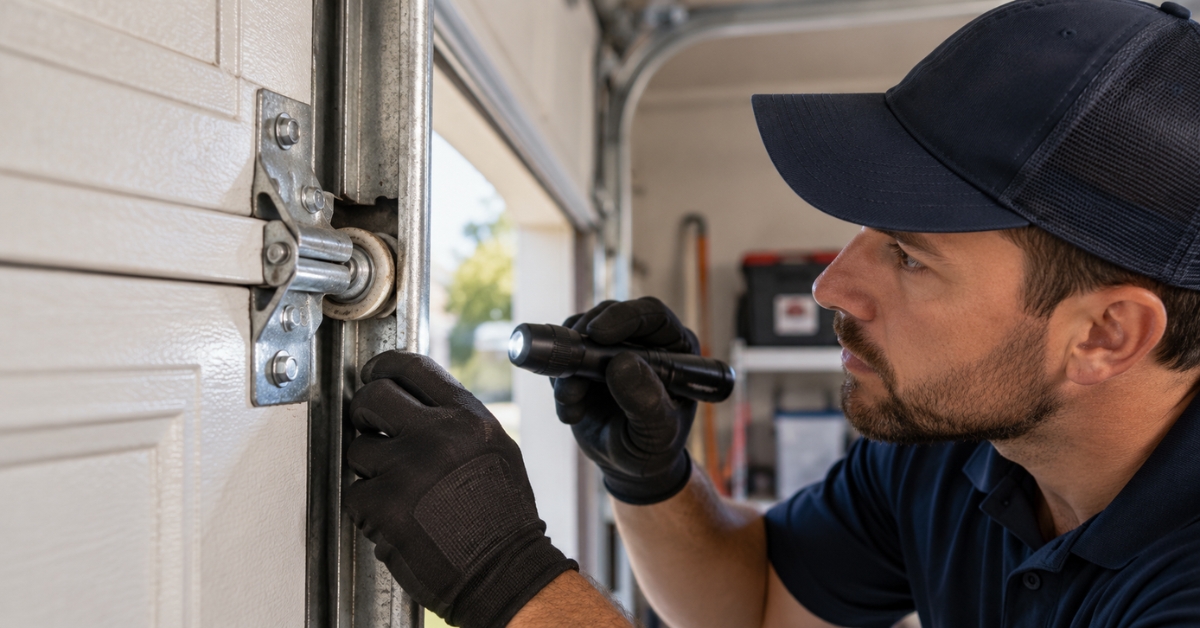
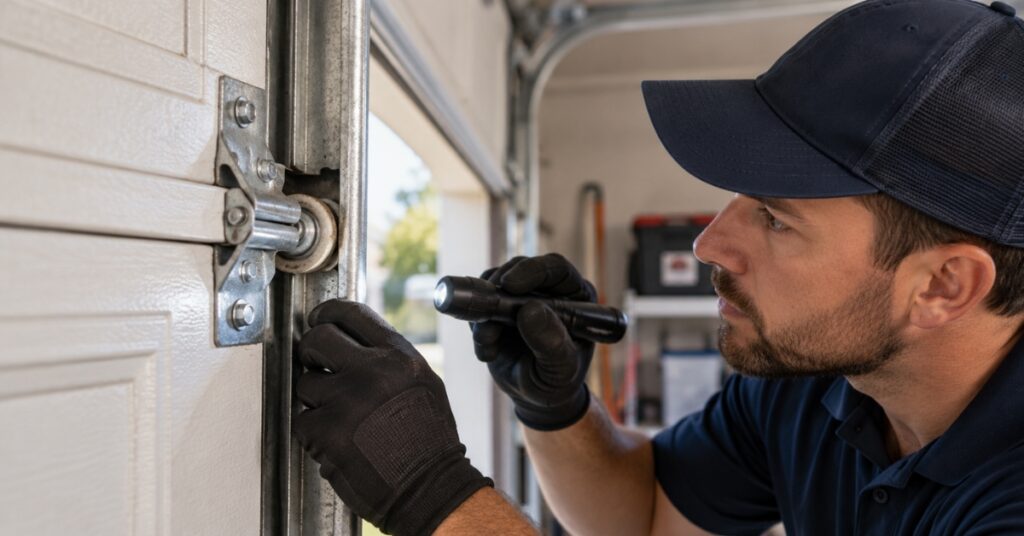
A garage door rarely goes from smooth and quiet to obviously troublesome overnight. More often, the change happens gradually. You may notice a new squeak when the door starts moving, a slight shake halfway up the tracks, or a rough spot that was not there a few months ago. Eventually, the door may sound noticeably louder or appear to move unevenly from one side to the other.
These symptoms can be easy to dismiss when the door still opens and closes. However, noise and uneven movement can be early signs that parts of the door are wearing, shifting, or no longer working together correctly. Rollers, tracks, hinges, brackets, and other hardware all influence how smoothly the door travels. Understanding what different symptoms can indicate can help homeowners address smaller problems before they place additional strain on the rest of the system.
Why Garage Door Rollers Have Such a Big Effect on Movement
Garage door rollers guide the door through its tracks every time it opens or closes. Because they travel the full path of the door repeatedly, their condition has a direct effect on both movement and noise.
As garage door rollers wear, they may stop rotating as freely as they once did. A roller can develop flat spots, worn bearings, cracks, or other deterioration that prevents it from traveling smoothly. Instead of rolling consistently through the track, it may drag, shake, or create resistance.
Homeowners noticing these symptoms may want to have their garage door rollers inspected. Roller problems do not always cause the door to stop working immediately, but continuing to operate the door with damaged or badly worn rollers can affect surrounding components.
Squeaking and Grinding Sounds
A squeak can develop when moving components lack proper lubrication or when a roller begins experiencing increased friction. Grinding is generally more concerning because it can indicate that something is dragging or rubbing where it should be rolling freely.
The location of the noise can offer a useful clue. A sound that appears to travel upward with the door may point toward rollers or hinges. A sound concentrated around one section of track may suggest a damaged roller, track obstruction, or alignment problem.
The key is to pay attention to changes. A garage door does not need to be silent, but a new or increasingly harsh sound deserves investigation.
Wobbling and Vibration
Rollers should help keep the door stable as it travels. When one or more rollers are badly worn or damaged, the door may wobble slightly within the tracks.
That movement can sometimes be seen along the edges of the door. It may also be felt as vibration through the door panels or opener system.
Vibration matters because the effects can extend beyond the roller itself. Repeated shaking can place additional stress on hinges, brackets, fasteners, and other connections. What begins as one worn component can gradually contribute to looseness elsewhere.
Rough Movement Does Not Always Mean the Rollers Are Bad
Because rollers directly control how the door travels through the tracks, they are an obvious place to investigate when movement becomes rough. They are not, however, the only possible cause.
A garage door functions as a connected system. The rollers need a clear and properly positioned path, hinges need to move correctly, hardware needs to remain secure, and the lifting system needs to keep the door appropriately balanced.
That means similar symptoms can come from different problems.
Track Problems Can Make a Good Roller Move Badly
Even a roller in reasonable condition can struggle if its track is damaged, obstructed, or incorrectly positioned.
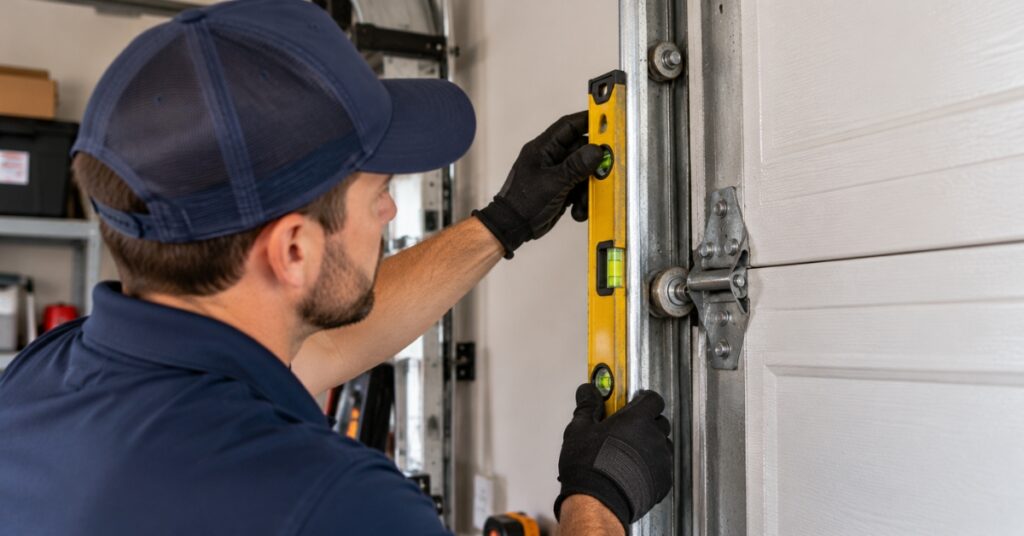
The tracks provide a specific path for the rollers. If that path narrows, bends, shifts, or becomes uneven, the roller may encounter resistance at the affected area. The result can be hesitation, scraping, shaking, or a noticeable change in sound.
Proper garage door track alignment is therefore an important part of diagnosing rough movement. Simply replacing a roller without identifying a track problem may leave the original symptom unresolved.
Watch Where the Door Hesitates
One useful observation homeowners can make is where the rough movement occurs.
If the door shakes throughout most of its travel, several rollers or broader hardware issues could be involved. If it repeatedly hesitates or makes noise at approximately the same height, the problem may be concentrated in a particular roller, hinge, or section of track.
Do not place your hands near moving hardware to investigate. Instead, watch and listen from a safe position while the door operates normally.
Hinges Help the Door Follow the Track
A sectional garage door has to change shape as it travels from a vertical position to a horizontal position above the garage. Hinges allow the individual door sections to move relative to one another during this transition.
Loose, damaged, or worn hinges can contribute to rattling, popping, shaking, and uneven movement. A hinge problem can also change how a roller sits relative to its track.
For example, if hardware holding a roller carrier becomes loose, the roller may no longer maintain the same position as the door moves. That small change can produce additional vibration or allow the door to shift more than it should.
Visible loose hardware should not automatically be treated as a simple do-it-yourself tightening project. Some garage door components are associated with high-tension parts of the system, and indiscriminately adjusting hardware can create additional problems.
How One Worn Part Can Affect the Rest of the Door
A garage door contains multiple components that are designed to share the work of moving a large, heavy door in a controlled way. When one component begins creating unnecessary resistance, other parts may compensate.
A roller that drags rather than rolls smoothly can require more force to move the door. A track problem can create resistance at the same point during every cycle. Loose hinges can introduce vibration that travels through the door.
Over time, that added resistance or movement can affect brackets, fasteners, hinges, tracks, and the garage door opener.
The Opener May Be Working Harder Than It Should
The opener moves the door, but it should not have to overcome excessive mechanical resistance.
If a door becomes progressively rougher while operating, the opener may sound strained or appear to slow at certain points. That does not necessarily mean the opener itself is failing. It may be responding to resistance elsewhere in the garage door system.
This is one reason replacing an opener should not automatically be the first response to a door that has become noisy or sluggish. The underlying movement problem needs to be identified.
Why Maintenance Can Prevent Some Noise and Wear
Many garage door components move hundreds of times over the course of normal household use. Friction, vibration, and repeated loading gradually affect hardware even when nothing is obviously broken.
Routine garage door maintenance can help identify developing wear, loose components, lubrication needs, and movement issues before they become more noticeable. Maintenance also provides an opportunity to evaluate the door as a complete system rather than waiting until one component fails.
Lubrication can help certain moving parts operate more quietly, but it should not be viewed as a universal fix. A damaged roller, bent track, worn hinge, or balance problem will not be corrected simply by adding lubricant.
What Different Garage Door Noises May Be Telling You
Noise is useful because different sounds can accompany different types of movement problems.
Squeaking
Squeaking commonly accompanies friction at moving components. Rollers, hinges, and other pivot points may be involved. If the squeaking persists after appropriate maintenance, wear or another mechanical issue may need attention.
Grinding or Scraping
A grinding or scraping sound can suggest that something is rubbing instead of moving freely. A roller may not be rotating properly, or a component may be contacting the track.
These sounds should not be ignored, particularly if they are becoming louder.
Rattling
Rattling can develop from vibration or loose hardware. Watch whether the rattling occurs throughout the door’s travel or primarily at a certain point.
Popping
Occasional popping may occur when sections or hardware shift under movement. Repeated or increasingly loud popping should be evaluated, especially when accompanied by jerky operation.
When Uneven Movement Could Point to Something More Serious
Not every uneven garage door is experiencing a roller or track problem. The lifting system also has a major influence on how evenly the door travels.
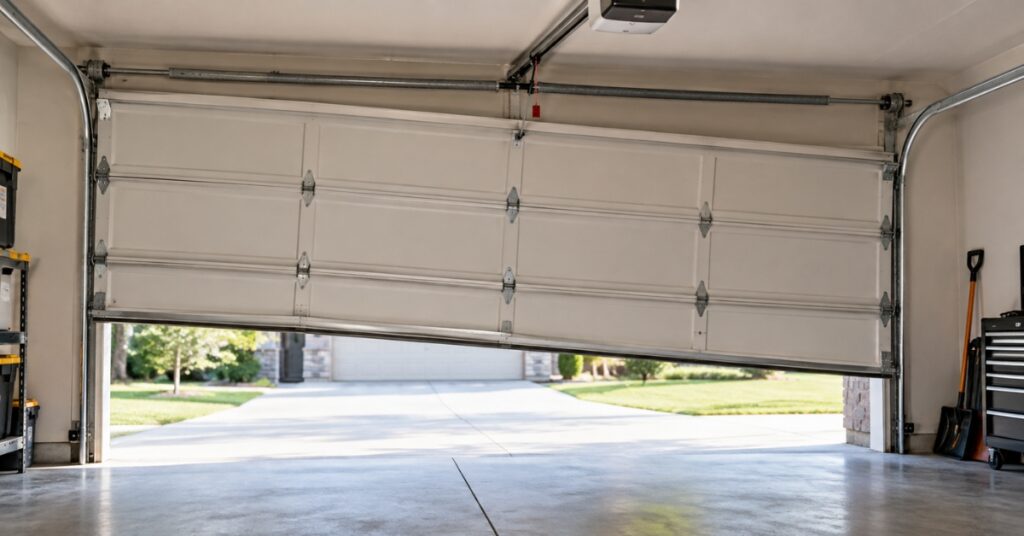
If one side suddenly appears lower than the other, the door feels unusually heavy, or movement changes abruptly rather than gradually, the issue may involve a spring or cable rather than ordinary roller wear.
This distinction is important because springs and cables operate under significant tension. Homeowners who notice a sudden change in door balance should learn when rough movement may indicate a spring or cable problem and avoid attempting to manipulate high-tension components themselves.
A door that becomes crooked, difficult to lift, or dramatically different from one day to the next deserves prompt professional attention.
When Should You Stop Using a Rough or Noisy Garage Door?
A little additional noise does not necessarily mean the garage door is about to fail. The combination of symptoms matters.
Consider stopping operation and arranging an inspection when the door is visibly crooked, a roller appears to be leaving the track, a cable looks loose or damaged, the door drops unexpectedly, or movement becomes severely jerky.
Continued operation can sometimes turn a localized problem into a larger repair. If a worn roller is already placing abnormal pressure on a hinge or track, repeatedly cycling the door can increase that stress.
For gradually increasing squeaks or mild vibration, scheduling an inspection before the symptoms worsen can help determine what is actually causing them.
Paying Attention to How the Door Changes
A garage door provides plenty of clues about its mechanical condition. Changes in sound, speed, vibration, and alignment can all signal that components are no longer moving as smoothly as intended.
Garage door rollers are one common source of these changes because they guide the door through every opening and closing cycle. However, rollers should always be considered alongside the tracks, hinges, brackets, opener, and lifting system.
Rather than assuming every squeak needs lubricant or every rough movement requires a new opener, pay attention to when the symptom happens and whether it is getting worse. Identifying the source of resistance or instability early can help prevent unnecessary stress from spreading to other parts of the garage door.
Frequently Asked Questions
Why is my garage door suddenly louder than usual?
A sudden increase in noise can come from worn rollers, loose hardware, hinge problems, track issues, or other mechanical changes. The type of sound and where it occurs during operation can help narrow down the cause.
How do I know if garage door rollers are worn out?
Possible signs include wobbling, vibration, squeaking, grinding, hesitation, or rollers that appear visibly cracked or damaged. Because other components can produce similar symptoms, the entire door system should be considered during diagnosis.
Can bad rollers damage a garage door track?
A badly worn or damaged roller can create abnormal movement and additional stress as it travels. Over time, that may contribute to problems involving tracks, hinges, brackets, or other hardware.
Why does my garage door shake when opening?
Shaking can result from worn rollers, loose hinges or brackets, track problems, or issues affecting the balance of the door. The location and severity of the shaking can provide useful diagnostic clues.
Why does my garage door move unevenly from side to side?
Uneven movement can be related to rollers and tracks, but a significant or sudden imbalance can also involve springs or cables. A noticeably crooked door should be inspected rather than repeatedly operated.
Will lubricating my garage door stop the squeaking?
Proper lubrication can reduce friction-related noise on components designed to be lubricated. However, it cannot repair a damaged roller, bent track, worn hinge, or other mechanical problem.
Should I replace my garage door opener if the door is moving roughly?
Not necessarily. An opener can sound strained because the door itself has excessive resistance. Rollers, tracks, hinges, balance, and related hardware should be evaluated before assuming the opener is the source of the problem.