A garage door is one of the largest moving systems in a home, and regular upkeep can help it continue operating smoothly, quietly, and safely. Because the door relies on several connected components, even a small issue with a roller, seal, sensor, or piece of hardware can eventually affect the way the entire system moves.
Homeowners do not need to become garage door technicians to take good care of their doors. Many useful maintenance tasks involve simple observation, cleaning, testing, and listening for changes. The important part is knowing which tasks are safe to handle and which components should only be inspected or adjusted by a trained professional.
1. Start With a Complete Visual Inspection
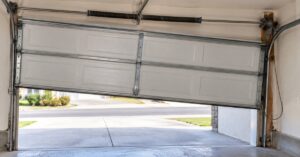
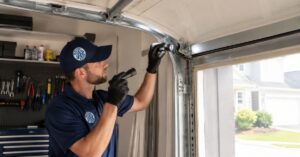
One of the simplest maintenance habits is also one of the most useful. Stand inside the garage with the door closed and look over the entire system before operating it. Check the door panels, tracks, rollers, hinges, cables, springs, and visible hardware for anything that appears loose, damaged, bent, rusted, or out of position.
Next, operate the door and watch it travel from fully closed to fully open and back again. Movement should appear relatively smooth and consistent. A door that jerks, shakes, tilts to one side, or hesitates at certain points may have a problem that requires closer attention.
Visible wear does not always mean immediate failure, but it can provide an early warning. When something looks wrong or the door’s operation has noticeably changed, scheduling professional garage door service can help identify the source of the problem before additional garage door parts are affected.
Avoid touching or attempting to reposition cables, springs, or brackets that appear damaged. These components can remain under significant tension even when the door is not moving.
2. Listen for Changes in Garage Door Sounds
Homeowners become familiar with the normal sounds their garage doors make. That makes unusual noises one of the easiest signs to recognize during routine maintenance.
Listen for grinding, scraping, squealing, rattling, popping, or banging while the door operates. A new sound may indicate worn rollers, loose hardware, insufficient lubrication, track problems, or another mechanical issue.
Pay attention to where the sound seems to originate. A squeak around a hinge may have a very different cause from a loud pop near the spring system.
Persistent or worsening noises should not simply be ignored. If the cause is unclear, professional garage door repair is safer than experimenting with adjustments to unfamiliar components.
3. Check and Clean the Safety Sensors
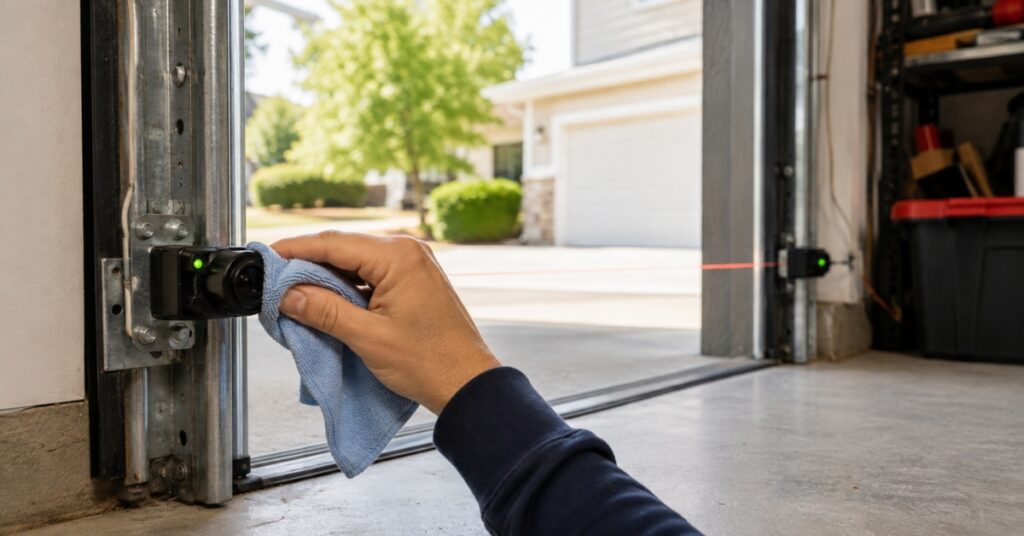
Modern automatic garage doors typically use photoelectric sensors near the bottom of the opening. These sensors are an important part of garage door safety because they help prevent the door from closing when an obstruction is detected.
Look at both sensors and make sure nothing is blocking them. Dust, dirt, cobwebs, stored objects, or accidental bumps can interfere with their operation. Gently clean the sensor lenses with a soft cloth when needed.
You can also test the system according to the manufacturer’s instructions. If the sensors repeatedly fail to recognize an obstruction, appear misaligned, or cause the door to reverse without an obvious reason, the system may need professional attention.
Never bypass or intentionally disable a garage door safety feature simply to keep the opener operating.
4. Lubricate Appropriate Moving Components
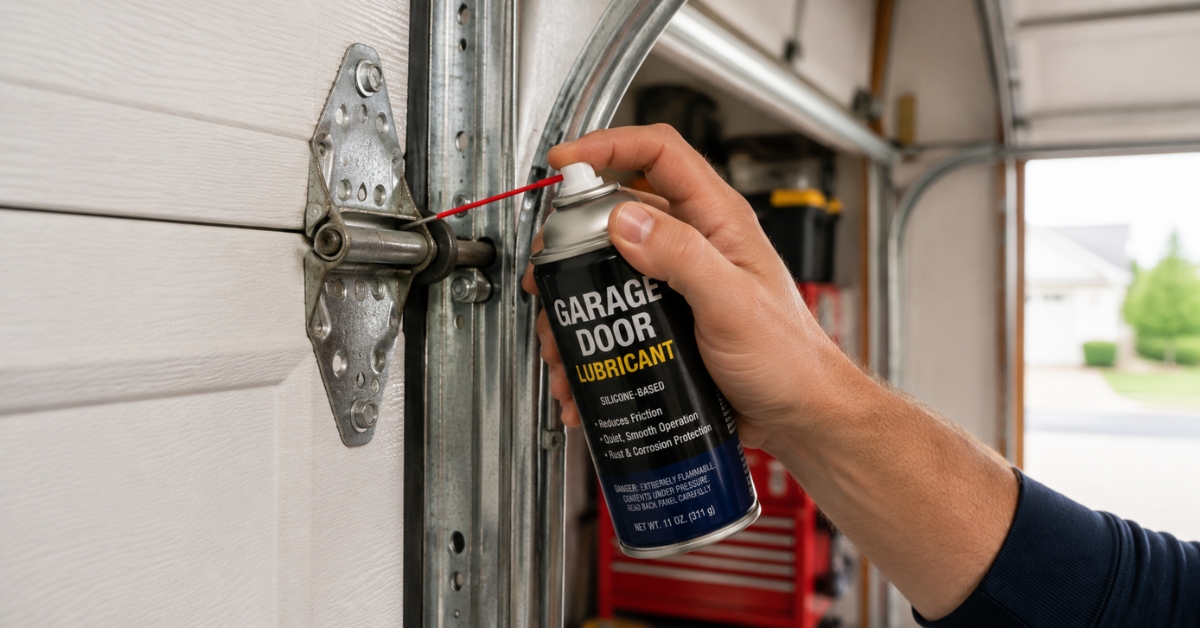
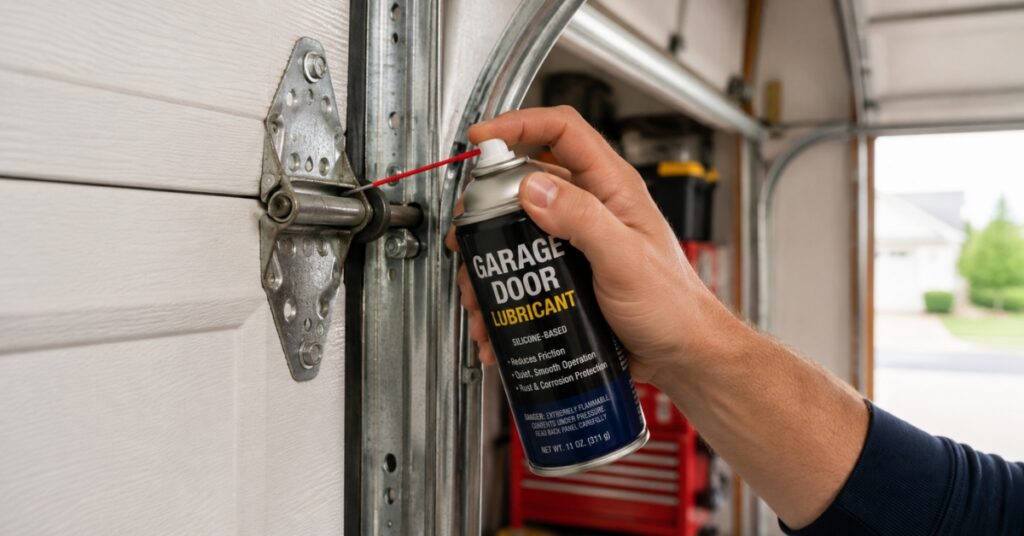
Proper lubrication can reduce friction and help certain garage door parts move more smoothly. Hinges, rollers with appropriate bearings, and other manufacturer-approved moving components may benefit from periodic lubrication.
Use a lubricant specifically recommended for garage door systems or follow the door and opener manufacturer’s instructions. Applying too much product can attract dirt and debris, so more is not necessarily better.
It is equally important to know what should not be lubricated. Some rollers and other components may be designed to operate without additional lubricant. Tracks generally need to remain clean rather than coated with grease.
Homeowners should also avoid treating garage door springs as routine DIY maintenance items. Garage door springs operate under substantial tension, and problems involving them should be evaluated by a qualified technician.
5. Inspect the Weatherstripping and Bottom Seal
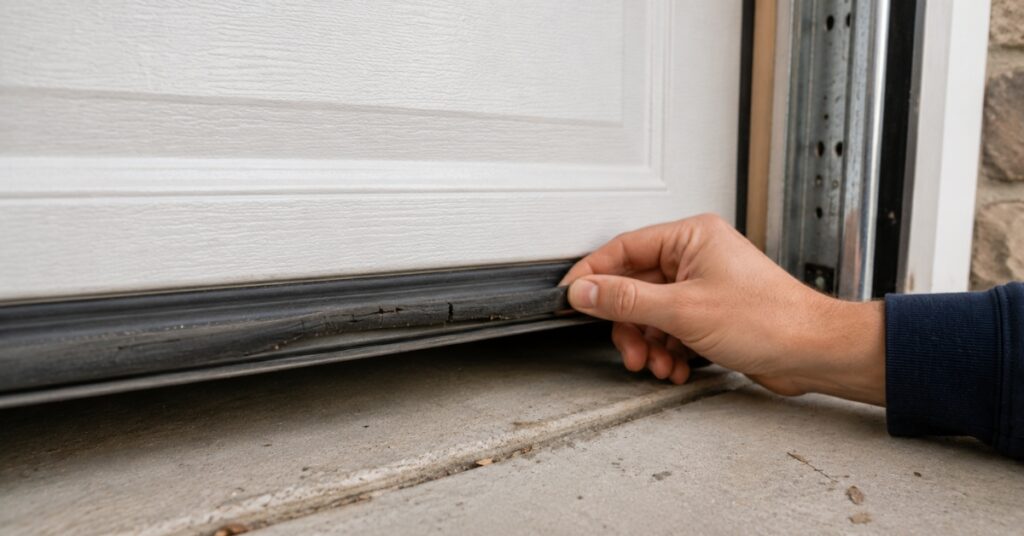
Seals around the garage door help reduce drafts, moisture, dust, leaves, and outdoor debris entering the garage. Over time, exposure to weather and repeated movement can cause these materials to crack, flatten, tear, or pull away.
Inspect the bottom seal while the door is closed. Look for visible gaps between the door and floor. Then check the weatherstripping around the sides and top of the opening for deterioration.
Damaged seals may affect comfort inside the garage and leave more room for dirt, water, and pests to enter. Replacing worn garage door weatherstripping can also be worth considering when evaluating an older door or planning broader improvements to the garage door system.
The correct seal depends on the door and installation, so homeowners should verify compatibility before purchasing replacement material.
6. Test the Door’s Auto-Reverse Function
The auto-reverse system is another important garage door safety feature. A properly operating door should reverse when its safety system detects an obstruction during closing.
Homeowners should follow the opener manufacturer’s recommended procedure for testing this feature. The exact testing method can vary depending on the opener model and age.
If the door does not reverse as expected, stop using the automatic closing function until the problem can be evaluated. Do not repeatedly test a malfunctioning system in ways that could damage the door or create a safety hazard.
7. Replace Remote and Keypad Batteries When Needed
A slow or inconsistent remote is not always a sign that the garage door opener itself is failing. Sometimes the problem is simply a weak battery.
If a remote requires several button presses, works only at a shorter distance, or responds inconsistently, replacing its battery is an easy first step. Exterior wireless keypads may also need periodic battery replacement.
Homeowners should check the manufacturer’s instructions for the correct battery type and any steps required after replacement. Depending on the system, the remote or keypad may need to be reprogrammed.
It can also be useful to replace batteries proactively if they have been in place for a long time, especially before periods when dependable garage access is particularly important.
8. Look for Loose or Worn Hardware
Repeated opening and closing creates vibration throughout the garage door system. Over time, some visible hardware can loosen or show signs of wear.
During a visual inspection, look at hinges, brackets, roller assemblies, and other accessible components. Watch for missing fasteners, corrosion, cracks, unusual movement, or pieces that no longer appear properly aligned.
This is an area where observation is often safer than adjustment. Tightening the wrong component or attempting to correct hardware connected to the spring or cable system can be dangerous.
Understanding the signs associated with common door repairs can help homeowners distinguish between routine wear and problems that deserve professional attention.
9. Keep Tracks and the Door Area Clean
Garage door tracks can collect dust, leaves, cobwebs, and other debris. Keeping the visible track area clean makes it easier to spot damage and helps prevent debris from interfering with normal movement.
Use a dry cloth or soft brush to remove loose material from accessible areas. Do not force tools into the track, bend the track, or attempt to realign it yourself.
The area around the door should also remain reasonably clear. Boxes, tools, bicycles, and other stored items can interfere with sensors or become obstacles as the door moves.
Look at the tracks from a short distance and compare both sides. If one appears bent, separated from the wall, or significantly out of alignment, stop and have the system inspected rather than trying to straighten it manually.
10. Know When Maintenance Becomes a Professional Job
Perhaps the most important maintenance task is recognizing the limits of safe DIY work. Cleaning sensors, checking seals, replacing remote batteries, observing movement, and performing manufacturer-approved lubrication are generally approachable homeowner tasks.
Other work involves substantially greater risk. Garage door springs, lifting cables, bottom brackets, and certain parts of the counterbalance system can be under significant tension. Attempting to loosen, remove, adjust, or replace these components without proper training and tools can cause serious injury or property damage.
Call a professional if you notice a broken or stretched spring, frayed cable, crooked door, damaged track, repeated reversal problems, unusually heavy movement, or a door that will not stay in position.
A technician can inspect how the individual components are working together instead of addressing only the most obvious symptom.
How Often Should You Check a Garage Door?
There is no single schedule that applies perfectly to every door. Usage, climate, door construction, opener type, and component age can all influence how frequently maintenance is needed.
A useful approach is to perform quick visual and operational checks throughout the year and a more thorough inspection periodically. Doors that are used several times every day may deserve more frequent attention than doors on detached garages that see limited use.
Seasonal changes can also provide a convenient reminder. Temperature shifts may affect seals and other materials, while winter moisture and summer dust can make cleaning and inspection particularly useful.
The goal is not to constantly adjust the system. Instead, regular observation helps homeowners notice changes before a minor concern becomes a larger problem.
Garage Door Maintenance FAQ
Can I lubricate my garage door myself?
Some garage door components can be lubricated by homeowners when the manufacturer recommends it. Use an appropriate garage door lubricant and follow product and manufacturer instructions. Avoid applying grease indiscriminately to tracks or other components that are not designed for it.
Should homeowners adjust garage door springs?
No. Garage door springs are part of a high-tension counterbalance system. Spring adjustment, removal, and replacement should be handled by trained professionals with appropriate tools and experience.
Why is my garage door suddenly making more noise?
New noises can result from several issues, including worn rollers, loose hardware, insufficient lubrication, track problems, or aging mechanical components. If basic cleaning and manufacturer-approved maintenance do not resolve the noise, arrange an inspection.
How do I know if garage door seals need replacement?
Look for cracking, tearing, flattening, missing sections, or visible daylight around the closed door. Water, debris, or noticeable drafts entering around the perimeter can also indicate deteriorated seals.
What should I do if the garage door safety sensors are not working?
First check for obvious obstructions and gently clean the sensor lenses. If the sensors still fail to operate correctly, avoid bypassing them and have the system inspected.
When should I stop using a garage door?
Stop operating the door if you see a broken spring, frayed cable, severely bent track, hanging component, or significant door misalignment. You should also stop if the door moves unpredictably or appears at risk of falling. Keep people and vehicles away from the affected area until the system can be inspected.
Make Routine Checks Part of Home Care
Garage door maintenance does not need to involve complicated repairs. Paying attention to movement, sounds, seals, sensors, hardware, batteries, and visible wear can provide valuable information about the condition of the system.
The safest approach is to handle simple observation and manufacturer-approved upkeep yourself while leaving high-tension and structural components to trained professionals. With consistent attention and clear boundaries between homeowner maintenance and professional work, a garage door can remain dependable, functional, and safer to operate throughout the year.