A garage door that suddenly stops working can make it seem like the entire system has failed. In many cases, however, the problem comes down to one of two components: a spring or a cable. Because these parts work together to support and control the weight of the door, their symptoms can sometimes look surprisingly similar.
A loud snap from the garage, a door that suddenly feels extremely heavy, crooked movement, or a cable hanging loose can all point toward a problem with the lifting system. The important thing is not to force the door open or repeatedly operate the opener to figure out which component failed. Springs and cables operate under significant tension, and continuing to move the door after a failure can create additional problems.
Start With What Happened When the Door Failed
The symptoms you notice immediately before or after the problem can provide useful clues. You do not need to take anything apart or touch the spring and cable system to make these observations.
A loud bang followed by a door that will no longer lift normally is one of the most recognizable signs of a broken garage door spring. Depending on the spring system, you may also be able to see a separation or gap in the spring.
Cable problems can look different. A door may begin lifting unevenly, one side may lag behind the other, or a cable may appear loose near the track or drum. Professional garage door cable repair may be necessary when a cable has slipped, frayed, broken, or come off its drum.
The symptoms can overlap, though. A spring failure can cause a cable to lose tension, and a cable problem can make the door behave as though another part of the lifting system has failed. That is why visible symptoms should be treated as clues rather than a reason to start handling the components yourself.
A Loud Snap or Bang May Point to the Spring
One of the more dramatic garage door problems is hearing a sudden bang when nobody appears to be near the door. Homeowners sometimes think something fell in the garage or struck the door.
A broken garage door spring can create exactly that type of sound.
Garage door springs store mechanical energy that helps counterbalance the substantial weight of the door. When a spring breaks, the release can produce a sharp snapping or banging noise.
Look for a Visible Gap
If your garage door uses a torsion spring mounted above the opening, a broken spring may have a visible separation between sections of the coil. You may be able to observe this from a safe distance without touching anything.
An intact torsion spring generally appears continuous. When it breaks, the coils can separate and leave a noticeable gap.
That visual clue, combined with a loud snap and a suddenly heavy door, strongly suggests that the spring system needs professional attention.
A Suddenly Heavy Door Is Another Important Warning
Garage doors are heavy, but under normal conditions the spring system does much of the work required to lift them. That is why a properly functioning door can move relatively smoothly despite its weight.
When a spring fails, that counterbalancing assistance can disappear.
The opener may attempt to raise the door only a few inches before stopping. In other cases, the motor may run while the door barely moves. A manually operated door may suddenly feel far heavier than usual.
Do not repeatedly press the opener button to see whether the door eventually moves. The opener is designed to operate a properly balanced garage door, not compensate for a failed lifting system.
Continuing to run it against an unusually heavy door can place unnecessary strain on other components.
Crooked Movement Often Points Toward a Cable Problem
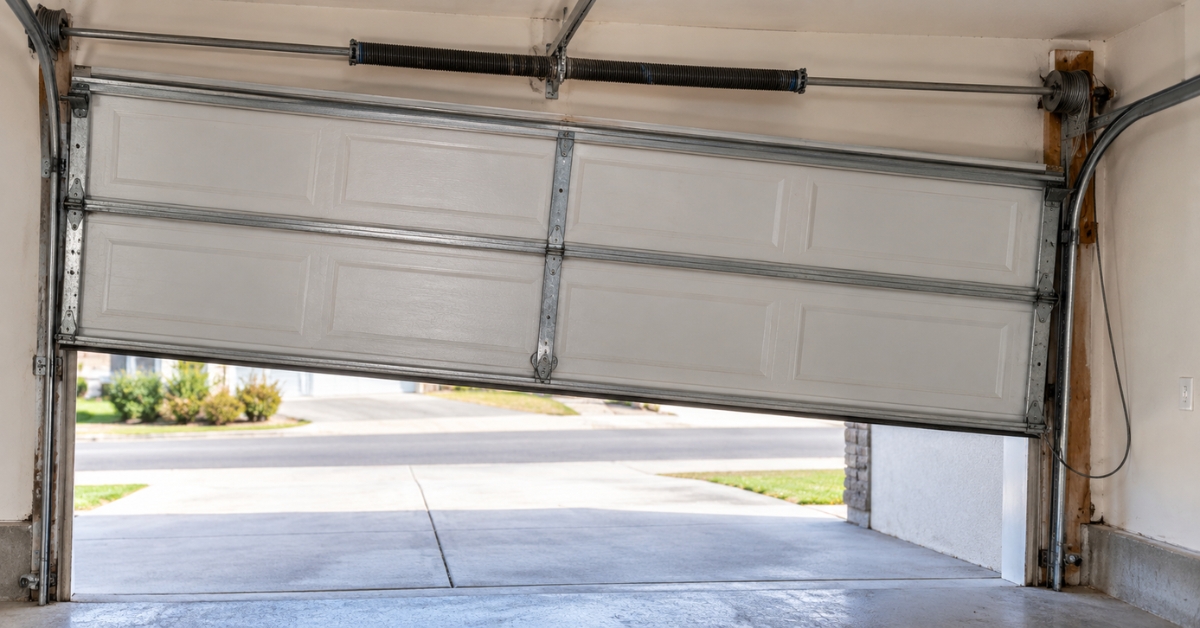
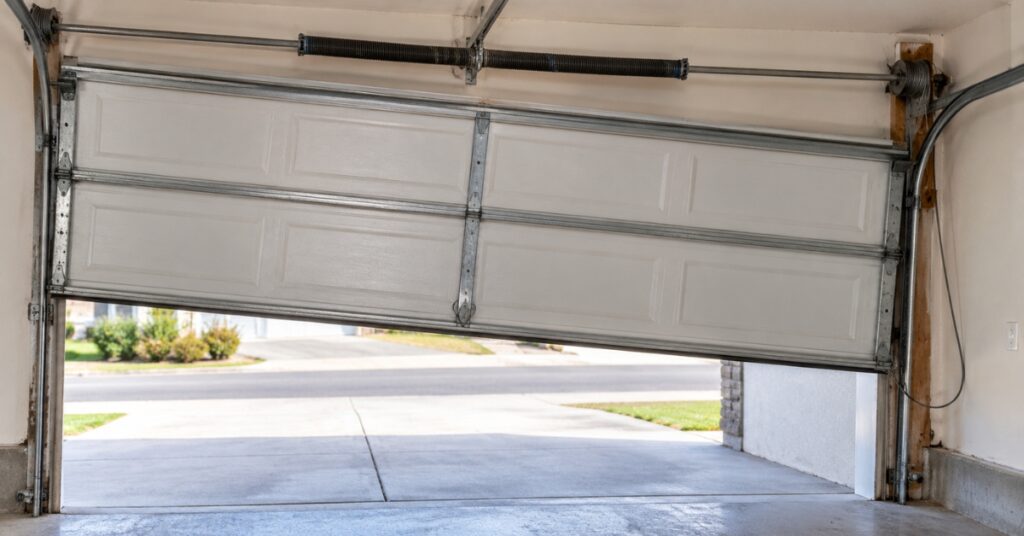
A garage door should remain relatively level as it travels along its tracks. If one side rises while the other stays lower, stop operating the door.
Crooked movement can indicate that a lifting cable has become loose, damaged, disconnected, or improperly seated.
Cables help transfer the force of the spring system so the door can lift evenly. When one side is no longer receiving the same support as the other, the door can tilt.
Why a Crooked Door Should Not Be Forced
It may be tempting to press the opener again and hope the door straightens itself out. That can make the situation worse.
An uneven door can bind against the tracks, place additional stress on rollers and hardware, or become increasingly misaligned. Depending on the failure, continued operation could also allow a cable to become more tangled or displaced.
If the door begins moving at an obvious angle, stopping operation is safer than trying to force it through another cycle.
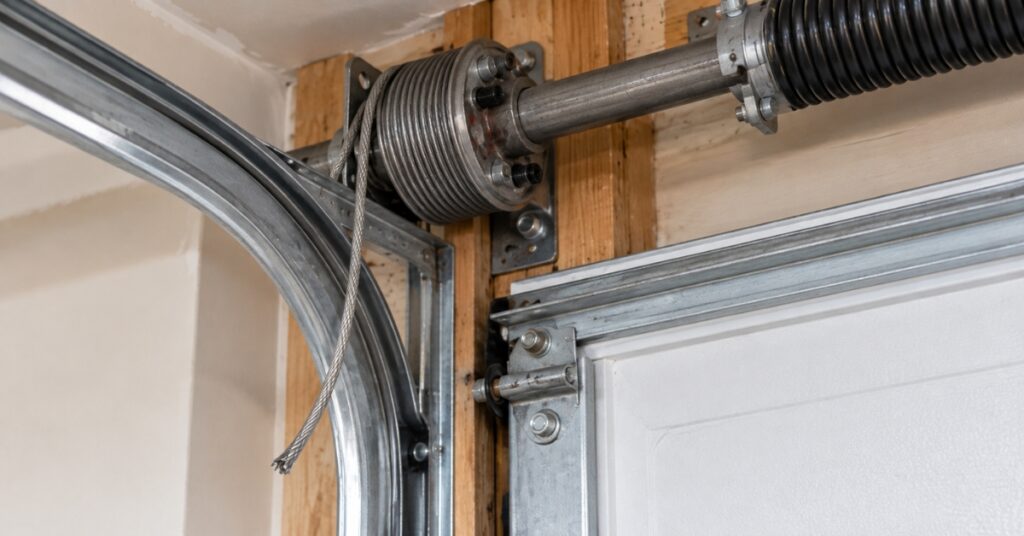
A Loose or Hanging Cable Is a Clear Sign Something Is Wrong
Garage door cables normally remain under controlled tension. If you notice a cable hanging loosely beside the door, wrapped incorrectly around a component, or lying near the floor, the lifting system is not operating normally.
The cable itself may be the problem, but that is not always the full story.
A spring failure can suddenly remove tension from the system and leave cables loose. This is one reason homeowners can mistake a spring problem for a cable problem.
Similarly, a cable can become damaged even when the spring remains intact. Fraying, corrosion, wear, or improper movement around the drum can eventually compromise the cable.
Visible cable damage should not be handled or pulled back into place by hand.
What Does It Mean When the Cable Comes Off the Drum?
On many garage door systems, lifting cables wind around drums positioned near the top of the door. These drums help manage the cable as the door opens and closes.
If a cable comes off the drum, one side of the door may lose proper lifting support.
Several conditions can contribute to this problem. The door may have become unbalanced, a cable may have lost tension, hardware may have shifted, or another component in the spring system may have failed.
A cable that has jumped off its drum should not simply be wrapped back around it.
Correcting the problem can require working around components that are under tension. More importantly, the reason the cable came off should be identified before the door returns to normal operation.
Springs and Cables Are Part of the Same Lifting System
It is useful to think of garage door springs and cables as interconnected parts rather than completely separate systems.
The springs provide the force needed to counterbalance the door’s weight. The cables help transfer and control that force so the door can travel smoothly.
That relationship explains why symptoms often overlap.
For example, a broken spring can leave a cable visibly slack even though the cable itself did not initially fail. A damaged cable can cause uneven movement even while the spring remains under tension.
Looking at only the most obvious symptom can therefore be misleading.
Pay Attention to How the Door Moves
Changes in movement often provide an early indication that something in the system needs attention.
A door that previously moved smoothly may begin jerking, hesitating, tilting, or stopping unexpectedly. You may hear unfamiliar noises or notice one side behaving differently from the other.
These changes are especially important when they appear suddenly.
Some movement problems can originate elsewhere in the system, including rollers, tracks, opener components, or hardware. Still, uneven lifting combined with loose cables or unusual spring appearance deserves prompt attention.
Homeowners can learn a lot simply by observing the door without touching the tensioned components.
Why Repeated Testing Can Make the Problem Worse
When something stops working, the natural reaction is often to test it several times.
With a garage door, repeated testing after a suspected spring or cable failure is not a good troubleshooting strategy.
Every attempt to operate the door places forces on the remaining components. If the door is crooked, unusually heavy, or improperly supported, another cycle could increase stress on the opener, tracks, rollers, cables, or mounting hardware.
The safest response to obvious lifting-system symptoms is simple: stop using the door.
That does not require knowing exactly which component failed first.
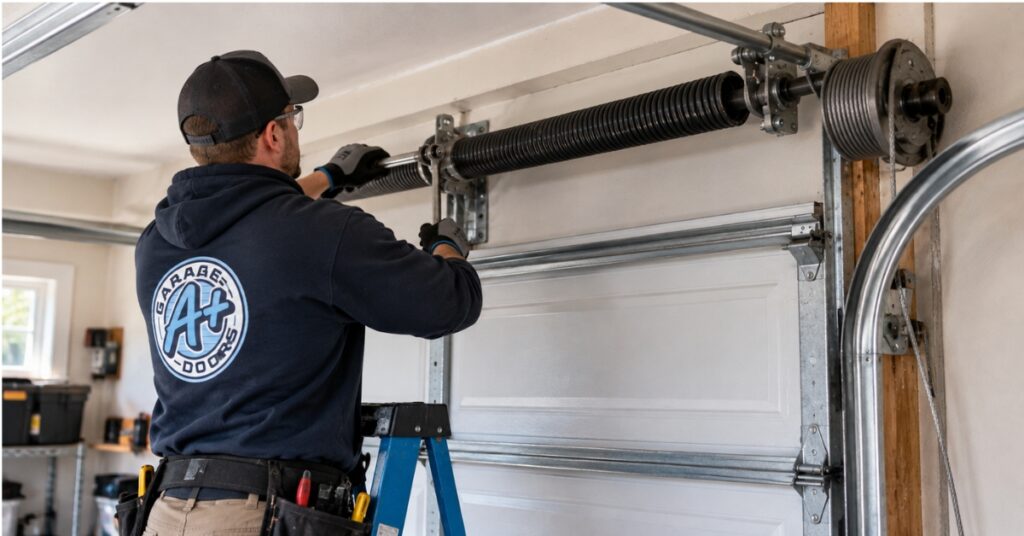
Do Not Use the Opener to Compensate for a Failed Spring
An automatic garage door opener can make a spring problem slightly confusing. Because the opener still makes noise and attempts to operate, homeowners may assume the motor should be strong enough to lift the door.
That is not its job.
The spring system is responsible for counterbalancing most of the door’s weight. The opener primarily provides controlled movement.
If the door becomes dramatically heavier because of a spring failure, repeatedly operating the opener can place additional strain on the motor and drive system.
A door that suddenly refuses to lift normally should be treated as a mechanical problem rather than something that can be overcome by repeatedly pressing the remote.
Watch for Smaller Warning Signs Before a Complete Failure
Not every spring or cable problem begins with a dramatic bang.
Cables can gradually develop visible fraying or corrosion. Door movement may become less smooth. One side may occasionally lag behind the other. Springs and related hardware can also show signs of wear as the system ages.
Changes in garage door movement are worth paying attention to even when the door still opens and closes.
The goal is not to diagnose every mechanical component yourself. Instead, recognizing changes early can help you know when the door should be evaluated before a more significant failure occurs.
When the Door Stops Working, Avoid DIY Tension Adjustments
There is a major difference between noticing a loose cable and safely correcting it.
Garage door spring and cable systems can store substantial mechanical energy. Adjusting spring tension, loosening hardware associated with the spring system, or attempting to rewind a cable can expose a person to sudden movement.
That is why visual observation is useful, while hands-on experimentation is not.
You can note whether the door is crooked, whether a spring appears separated, whether a cable is hanging loose, and what happened immediately before the problem began. Those details can help a technician understand the situation without requiring you to manipulate the system.
What to Do After You Notice a Spring or Cable Problem
Once you suspect a lifting-system failure, discontinue normal operation of the garage door.
Keep people, pets, and vehicles away from the immediate path of a door that is hanging unevenly or appears unstable. Avoid pulling on loose cables or touching spring hardware.
If possible, make note of the symptoms you observed. Did you hear a loud snap? Did the door stop halfway? Did one side rise higher than the other? Is a cable visibly loose?
These details can make the initial evaluation more efficient.
It can also be useful to consider whether you have noticed other garage door warning signs recently, such as unusual noises, inconsistent movement, or repeated problems opening and closing the door. Those symptoms may provide additional context about the condition of the system.
FAQ About Broken Springs and Garage Door Cables
Can a garage door still open with a broken spring?
It may move partially in some situations, particularly if an automatic opener attempts to lift it. However, the door may be dramatically heavier because the spring is no longer properly counterbalancing its weight. Continuing to operate the door can place unnecessary stress on other components.
Does a loose cable always mean the cable is broken?
No. A cable can become loose because it slipped off a drum, lost proper tension, or because another component, such as a spring, failed. A loose cable is a symptom that the lifting system needs attention, not necessarily proof that the cable itself broke first.
Why is my garage door lifting crooked?
Uneven movement can occur when one side of the door is not receiving proper lifting support. A loose, damaged, or disconnected cable is one possible cause. Because forcing a crooked door can worsen alignment and hardware problems, operation should be stopped until the cause is identified.
What does a broken garage door spring look like?
A broken torsion spring may show a visible gap in the coil above the garage door. Other symptoms can include a loud snapping sound, an unusually heavy door, or an opener that struggles to lift the door.
Should I try to put a garage door cable back on the drum?
No. The cable and drum are connected to a system that can be under significant tension. Reinstalling or adjusting a cable without the proper tools and procedures can be hazardous.
Can a broken spring cause the cable to come loose?
Yes. Springs and cables work together as part of the lifting system. When spring tension is suddenly lost, cable tension and positioning can also be affected. This is one reason the visible cable may not necessarily be the component that failed first.
The Symptoms Matter More Than Guessing the Failed Part
A loud snap, suddenly heavy door, crooked movement, loose cable, or cable that has come off its drum can all provide clues about what happened. However, spring and cable problems are closely connected, so symptoms can overlap.
The most important response is not to determine the exact failure by repeatedly testing the door. If a spring or cable has failed, stop using the garage door and avoid handling tensioned components.
Observing what changed and reporting those symptoms gives a garage door professional useful information while reducing the chance that continued operation turns one failed component into several damaged ones.