Introduction
Having a garage door remote in your car is one of life’s greatest conveniences. Press the button, and your garage door opens or closes with ease. But when your remote stops working, it can be frustrating, especially if you do not know the cause. A Plus Garage Door Repair has been serving the Salt Lake City area with garage door remote services since 2005 and has seen every type of remote issue imaginable.
This guide explains the most common causes of a non-functioning garage door remote and provides practical solutions to get your system back on track.
1. Garage Door Remote Has Dead Batteries
Dead or weak batteries are the most common reason a garage door remote stops working. Because remotes are used daily, the batteries can wear out faster than expected.
Signs:
- The indicator light on the remote is dim, flickering, or does not blink at all when pressed.
- The remote works only intermittently or requires multiple presses to respond.
Solution: Replace the battery or batteries in the remote. Most remotes are simple to open, and swapping batteries takes just a few seconds. Keeping spare batteries on hand can prevent unexpected issues.
2. LED Light Bulbs Interfering With Your Opener
Energy-efficient LED bulbs are popular for their brightness and low power use, but they can interfere with the signal between your remote and the garage door opener.
Symptoms:
- The remote works correctly only when close to the opener but fails at longer distances.
- Reprogramming the remote does not resolve the issue.
Fix:
- Temporarily swap LED bulbs for CFL or incandescent bulbs to test whether interference is the problem.
- Note that openers with built-in LED strips or integrated lighting systems are generally not affected.
3. Safety Sensor Issues
Safety sensors, also called eye sensors or photo eye sensors, are the small devices located about six inches from the floor on each side of your garage door. Their job is to prevent the door from closing if anything blocks the line of sight between them using infrared signals. Older openers may not have these sensors, but they have been required for all new systems since 1993 for safety reasons (UL 325).
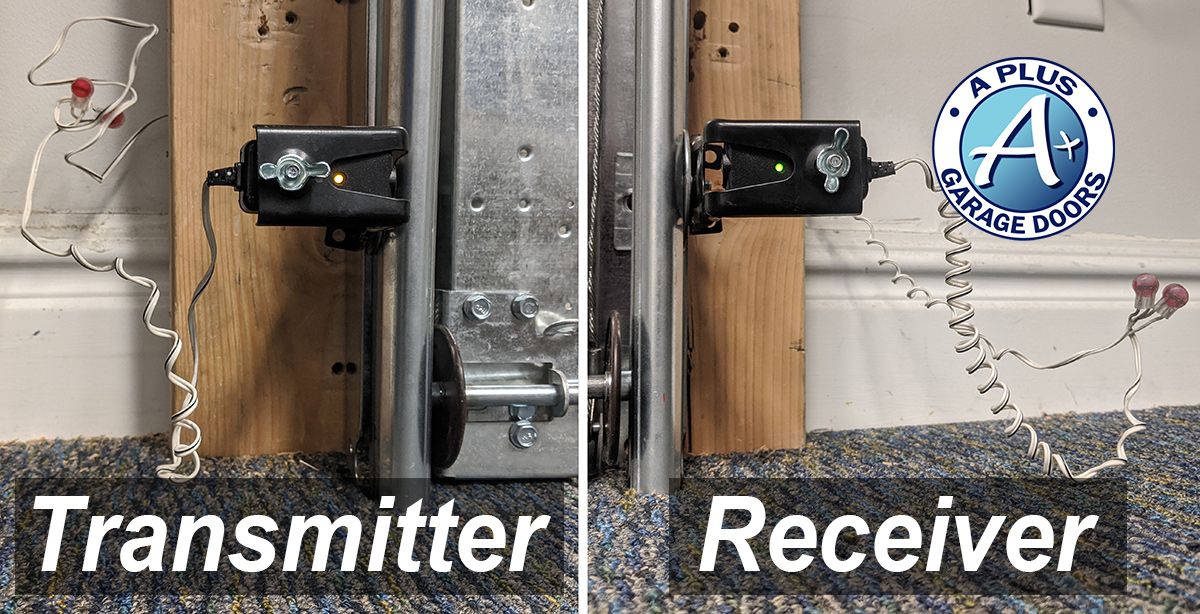
Most modern openers include LED indicators to show whether the sensors are working. For example, LiftMaster systems have one transmitter sensor (orange light) and one receiver sensor (green light), and most other brands have a similar setup. Both sensors must stay lit during operation for the door to close properly. If the LEDs blink or flicker, it is a clear sign that the safety sensors are not functioning correctly, which may cause the door to stop partway or fail to close entirely.
Common Causes of Safety Sensor Issues:
- Obstructions: Dirt, debris, vehicles, tools, or even cobwebs can block the sensor’s infrared signal. Clean the sensors and remove anything between them to restore function.
- Misalignment: Sensors that are bumped or removed from their mounts will break the line of sight. Reposition the sensors so the LEDs stay lit and tighten them by hand, usually with a wingnut.
- Unsecure Installation: If the sensor mount or associated hardware shifts during operation, it can interfere with the signal. Even a split-second misalignment can make the door reverse. Tighten all bolts and screws to secure the installation.
- Sunlight Interference: UV light interferes with the infrared signals used by the safety sensors, which can cause the system to behave as though there is a blockage. This can be solved by swapping the transmitting and receiving sensors (LiftMaster instructions), purchasing or making a sun shield (LiftMaster part), or ordering a new sensor set.
- Wiring Problems: Severed or damaged wires can stop sensors from working, while loose connections may cause intermittent operation. Inspect all wiring for cuts, frays, or chewed areas and repair as needed.
Safety Note: Many openers allow temporary override of safety sensors by holding the wall panel button for several seconds. Only do this with extreme caution, ensuring the door’s path is clear to avoid property damage or injury.
4. Check for Obstructions
The garage door opener has a force setting that reverses the door if it encounters resistance. Even small objects can trigger this safety feature.
Check:
- Tracks for debris, small toys, broom handles, ropes, or other obstacles.
- Rollers and cables to ensure smooth, unobstructed movement.
Even minor obstructions can prevent the door from closing fully and may cause intermittent operation.
5. Broken or Misadjusted Parts
Mechanical components like springs, torsion rods, drums, and cables support the door’s weight. If any part is broken or misadjusted, the door may fail to operate correctly.

Signs of Damage:
- The door opens partially and then closes immediately.
- Loud or unusual noises during operation, such as grinding or popping sounds.
Solution:
- Inspect the system visually for broken or damaged parts.
- Replace or repair springs, cables, torsion rods, or other components as needed.
- Professional service is strongly recommended due to safety risks from high-tension parts.
6. Reprogramming Your Remote
If batteries, sensors, bulbs, and mechanical parts are all functioning correctly, the remote itself may need reprogramming.
Steps:
- Refer to the manufacturer’s instructions for your specific remote model.
- LiftMaster and other major brands provide step-by-step programming guides to restore proper communication with the opener.
Reprogramming often resolves connectivity issues and restores normal operation. Each unit can be different, but if you have a LiftMaster remote, we have a step-by-step article that will help walk you through the process of programming it to your opener.
7. Advanced Issues
Sometimes the issue lies with the remote or the garage door opener itself, such as a faulty logic board.
Solution:
- Replace the remote if it is no longer functioning properly.
- Repair or replace the opener’s logic board if it is malfunctioning.
- Professional diagnosis ensures the root cause is addressed and prevents repeated failures.
Common Garage Door Remote Issues
| Issue | Symptoms | Solution |
| Dead Batteries | No indicator light | Replace batteries |
| LED Bulb Interference | Works only up close | Replace LED with CFL/incandescent temporarily |
| Safety Sensor Issues | Door reverses, LEDs blinking | Clean sensors, check alignment, repair wiring |
| Obstructions | Door reverses | Remove debris or objects in path |
| Broken Parts | Door opens partially, noisy | Inspect and repair springs, cables, rods |
| Remote Needs Reprogramming | Door unresponsive | Follow manufacturer programming steps |
| Advanced Hardware Failure | Remote or logic board broken | Replace faulty components |
Frequently Asked Questions
How often should I replace my garage door remote batteries?
Remote batteries typically last 1–2 years, depending on usage. If the remote becomes unresponsive or the indicator light dims, it’s time to replace them. Keeping spare batteries on hand is recommended.
Why does my garage door work sometimes but not always?
Intermittent operation is often caused by sensor misalignment, obstructions, or weak remote batteries. Check the safety sensors for dirt or blockage and ensure the remote is within range.
Can LED light bulbs really interfere with my garage door remote?
Yes, some LED bulbs can emit signals that interfere with garage door openers. Replacing the LED with a CFL or incandescent bulb temporarily can confirm if interference is the issue.
What should I do if my garage door safety sensors are blinking?
Blinking LEDs usually indicate misalignment, dirt, or a wiring issue. Clean the lenses, realign the sensors, and check for damaged wires to restore proper operation.
Is it safe to override the safety sensors to close my door?
Temporarily overriding the sensors is possible on most openers, but it should be done with extreme caution. Make sure nothing is in the door’s path to avoid injury or property damage.
Key Takeaways
- Most garage door remote issues are caused by batteries, sensor problems, or obstructions.
- LED light bulbs can interfere with remote signals.
- Broken springs, cables, or other components can prevent proper operation.
- Professional repair ensures safety and prevents further damage.
- Reprogramming or replacing faulty equipment may be necessary in advanced cases.
Keep Your Garage Door Remote Working Smoothly
A functional garage door remote is more than a convenience. It keeps your home secure and your daily routine running smoothly. Most issues can be solved with simple steps like replacing batteries, checking sensors, clearing obstructions, or reprogramming the remote.
For more complex problems, such as broken springs, cables, or faulty logic boards, professional repair ensures safety and prevents further damage. A Plus Garage Door Repair has been serving Salt Lake City and northern Utah with reliable garage door remote services since 2005.
Schedule your repair or maintenance today to restore the convenience and safety of your garage door.